
Run Rocket Academy's operations with a team of AI agents.
About Rocket Academy
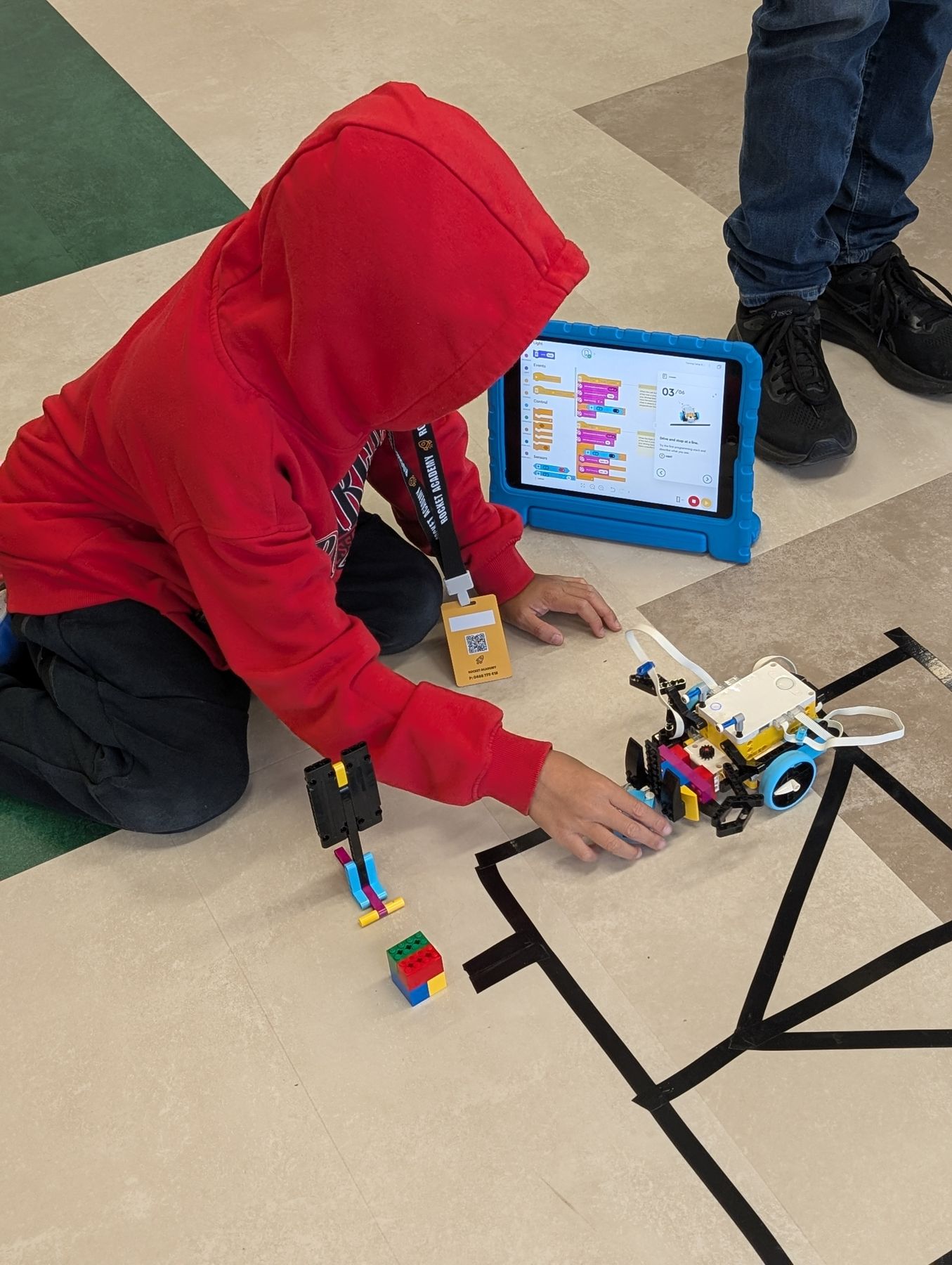
Rocket Academy teaches kids aged 4 to 14 hands-on STEAM through LEGO® robotics, coding and creative problem-solving. Along the way they build future-ready work and life skills: technology, engineering, teamwork and critical thinking, learned in a room where building feels like play.
We run after-school programs, weekend classes, school incursions, holiday camps and FIRST LEGO League training across 6+ locations in Melbourne.
We are a high growth start-up. We support 450 students a quarter today, and we want to triple that in the next 9 months. As our enrolments increase, we need to increase our administrative capacity to serve the growing demand.
The role
Rocket runs on eighteen documented runbooks, covering everything from enrolment changes and the weekly data sweep to camp rosters, re-enrolment campaigns and parent reminders. AI agents already do most of the work inside them, but each one still needs someone accountable for it.
Right now that person is Tiang, on all eighteen. This role takes four domains off him: Enrolment Operations, Program Operations, Holiday Program Preparation, and Parent Communications.
This is also a parent-facing role. Families are on the other side of almost everything you touch, and you are their advocate inside Rocket.
The work divides in two.
Make the routine self-service. A parent asking which classes run on a Saturday should get an answer without waiting on a person, and the same goes for a standard follow-up to a trial family. Where a task is common and the answer is knowable, you automate it.
Handle what the agents escalate. When an agent reaches something it should not decide alone, it comes to you and you make the call. Where that decision should hold next time, you write it into policy, so the same question does not have to be escalated again.
A good month is measured by how much of our operation ran without needing a person at all.
A large part of this job is automating away the routine parts of it. What is left is the work that needs a person: the exceptions, the harder calls, and building the next automation.
Some people find that unsettling. If you would rather the work looked the same each week, this is the wrong role.
An experiment, with a timebox
This role is new, and not only to Rocket. Very few organisations are running their operations this way yet, and we would rather be honest that we are still working out whether it holds up.
So we have set a three-month timebox. At the end of it we look at what actually happened: how much of the operation ran without a person, what the agents could not handle, and whether the role did what we hoped it would. If it works, the role grows, and we think it grows a long way. If it does not, we will tell you straight rather than string it out.
We would rather set that out now than have you discover it in month four. If you are after a guaranteed long-term position from day one, this will not be that. What it is, is a chance to help work out whether a genuinely new way of running an operation actually works.
The three things we will judge this on
1. You automate the routine, and you handle the exceptions. Simple enquiries and common enrolment tasks stop reaching a human. What does reach you gets decided quickly, and where it should be permanent, written into policy. You own the runbooks, and can start, review and validate the outputs in the four domains.
2. You learn to design and build new automations. We will train you. The field is new enough that training only takes you part of the way, so this will need a lot of self-directed learning on top. We want the person who goes and builds our next automation before anyone asks for it.
3. You help us triple our enrolments. Many of these automations drive growth directly. Holiday program preparation is seven runbooks run in sequence over six weeks, and how well it runs decides how full our camps are. Term re-enrolment, trial conversion and camp re-engagement work the same way. Running them well improves our enrolment growth.
A typical week
We've got an initial allocation of 16 hours a week. We would start with a minimum of 4 hours a day, and up to 8 hours, so depending on your schedule, that would be between 2, 3, or 4 days a week. A typical week could look like:
- Monday. Confirm the week's roster and get any changes out to the team. Start the weekly enrolment sweep, actioning what is clean and flagging what is not. Clear anything the agents escalated over the weekend. After a trial weekend, the conversion emails go out.
- Tuesday. Enrolment changes: signups, transfers, cancellations, make-ups. Each arrives as a parent request and leaves as an applied change and a reply.
- Wednesday. One-to-one with Tiang, then the escalation queue.
- Thursday. Build. Write the policy for the thing that came up twice last week, fix the runbook that has been limping, or design the automation for a gap you found.
What you'll be doing
- Running the AI runbooks for your four domains. You start them, read the output and decide what happens next.
- Verifying and validating agent work before it goes out. Is it correct? And is it the right answer? An agent's refund email can be accurate on every fact and still be the wrong thing to send a family that has been let down.
- Answering what the agents escalate. They handle the routine volume. What reaches you is what they could not or should not answer alone: the exceptions, the judgement calls and the unhappy ones. You reply within a day or two, in Rocket's voice.
- Writing the policies. A decision that comes up twice becomes a written rule, so it never has to be escalated again.
- Automating what is still manual. Simple enquiries, routine trial and enrolment emails, and anything else common enough to have a knowable answer.
- Running enrolments end to end: new students, transfers, refunds, waitlists and make-up classes.
- Rostering. Building the regular roster across programs and locations, and getting it out to educators early enough that they can plan around it. Same-day disruptions, like an educator calling in sick, go straight to Tiang.
- Preparing and running holiday programs, from camp launch through to the last day of camp week.
- Logistics. Ordering equipment and consumables, and registering teams for competitions.
- Telling us where the system is failing you. When a runbook breaks or the platform cannot do something, you describe it clearly enough that it can be fixed. Those reports become Tiang's fix list, and they are an important part of what you produce.
What we're looking for
Experience
- Three or more years in operations, administration, office management, or an executive assistant role. Education, childcare, or any small business where you wore several hats is a bonus.
- You have owned part of an operation end to end. Not "I helped with rosters", but "I built the roster every week, and here is what I changed after six months."
- You can tell us about an operational mess you walked into and what you did about it. We will ask follow-up questions.
The qualification
You have taught yourself a tool nobody taught you, and built something with it.
Any tool counts: a spreadsheet model that changed how a team worked, an automation you wired together, or a system you designed because the one you had was broken.
This is the qualification for the job: you take ownership of something and you learn it fast. We will train you on our tools, but the field moves faster than any training can. The habit of picking something up and learning to be good at it is essential, as we are continuously innovating, doing new things, and doing them well. We weight this above anything else on your CV.
Values fit
- Intentional and rigorous. You can describe a week with too much in it, and how you decided what mattered.
- High performing and supportive. You hold the bar, and you notice when someone needs help.
- Grit. You finish what you start, and you care whether it landed.
- Trust. Parents, educators and the rest of the team rely on you following through.
Technical competency
- You are deep with spreadsheets, and comfortable with calendars, email and basic CRM logic. We use Notion as our team hub.
- You have shipped real work with AI tools: prompts you have written, a custom GPT you built, or something you took all the way to finished with Claude or similar.
- You want to get good at advanced AI tooling. Writing agent instructions, designing automations, and working inside runbooks that contain scripts and queries. We will teach you this. Arriving with some of it already is a strong signal.
- Strong written English. We test this with a sample parent email.
- You catch things. We seed a deliberate error in the pre-work and see whether you find it.
- You hold a high standard, and you advocate for our families. You are the last check before anything reaches a parent or student, so their experience of Rocket is partly yours to own. That means asking what this will feel like on the receiving end, and sending work back when the answer is not good enough, including ours.
Practical requirements
- Valid Working with Children Check, or willing to get one before starting.
- Unrestricted right to work in Australia.
- A driver's licence is useful, since holiday programs run across several Melbourne locations.
Nice to have
- Background in education, childcare or family-facing services
- Process design or operations improvement experience
- Xero, payroll software or accounting basics
- Experience scaling a small business through messy growth
What we offer
- $40 per hour to start, inclusive of super and casual loading, reviewed as the role grows.
- Training in how we build automations, and time in the week set aside to keep learning.
- A small role built to become a big one. We are starting at 16 hours because the volume is not there yet. If the three-month trial works, the role grows as we grow toward 1,500 students a quarter, and the intention is that it eventually becomes full time. That depends on how fast we grow, and we will always be straight with you about where it stands.
- Sixteen hours across four mornings leaves the rest of your week yours.
- There is real scope to build our operational capability. Most of the systems you will design here do not exist yet.
- A standing weekly one-to-one with Tiang. We do not cancel them.
- A front-row seat to a genuinely new way of working. Very few people are doing this job anywhere yet.
How we hire
Three stages: Personal Experience, Values, and Technical Competency. Same questions and same scorecards for every candidate.
The Technical Competency stage includes short pre-work, sent 48 hours ahead. We give you the real output of one of our runbooks and ask which findings you would action, which you would escalate, and what the agent got wrong.
From application to decision is usually two to three weeks.
How to apply
Send your CV and a short answer to one question:
Tell us about something you taught yourself, and what you built with it.
250 words is plenty. Apply through our application form. We read every application ourselves and reply within five working days.